
Reflective Thermal Coatings with Energy Efficiency
Thermal coatings improve energy efficiency and reduce costs caused by high industrial temperatures.
Nowadays, these advanced coatings not only serve an aesthetic or protective purpose; they also act as a thermal barrier capable of significantly reducing indoor temperatures in industrial spaces.
Thanks to technologies such as microscopic ceramic spheres, it is possible to lower the internal temperature of an industrial building by up to 10°C, reducing air conditioning usage and improving thermal comfort.
What Are Thermal and Reflective Paints?
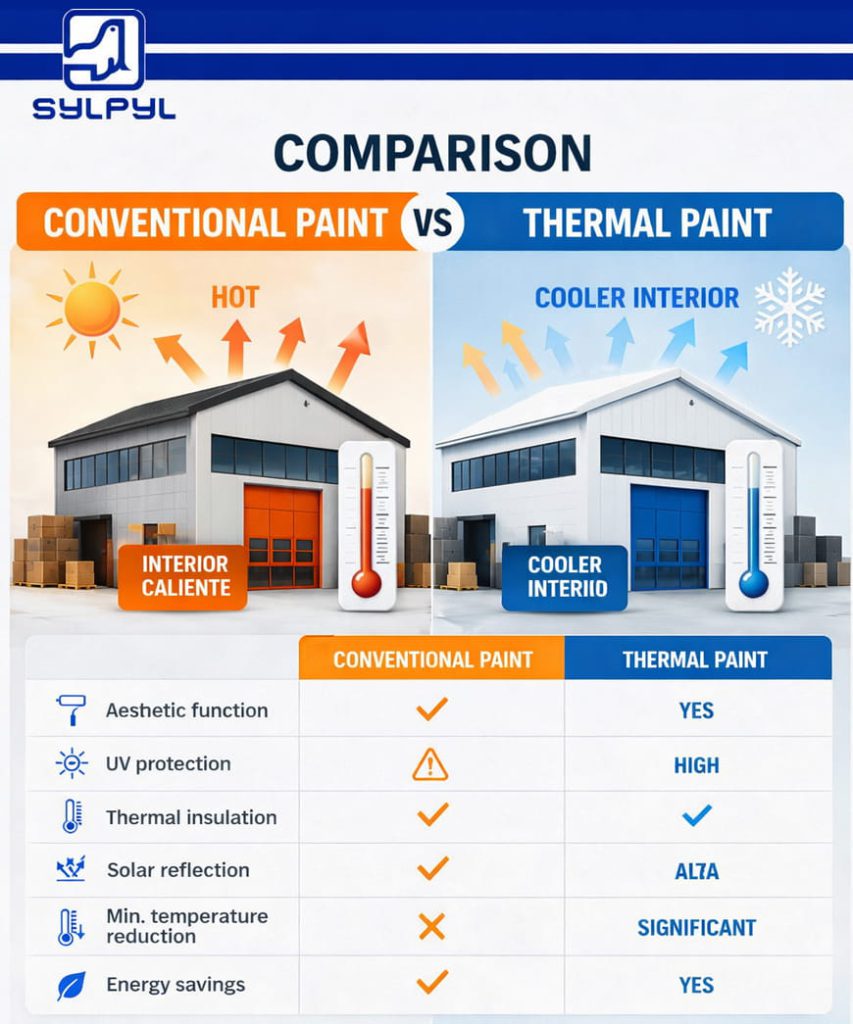
Thermal and reflective paints are specialized coatings designed to reduce heat transfer on surfaces exposed to sunlight.
They are formulated with technological components capable of reflecting solar radiation and minimizing heat absorption.
Unlike conventional paint, these coatings work as a liquid thermal insulation system. Their composition may include:
• 🔵 Ceramic microspheres
• 🌞 Reflective pigments
• 🧊 Insulating additives
• 🧱 High-durability resins
The main goal is to reduce heat buildup on roofs, walls, and metal structures.
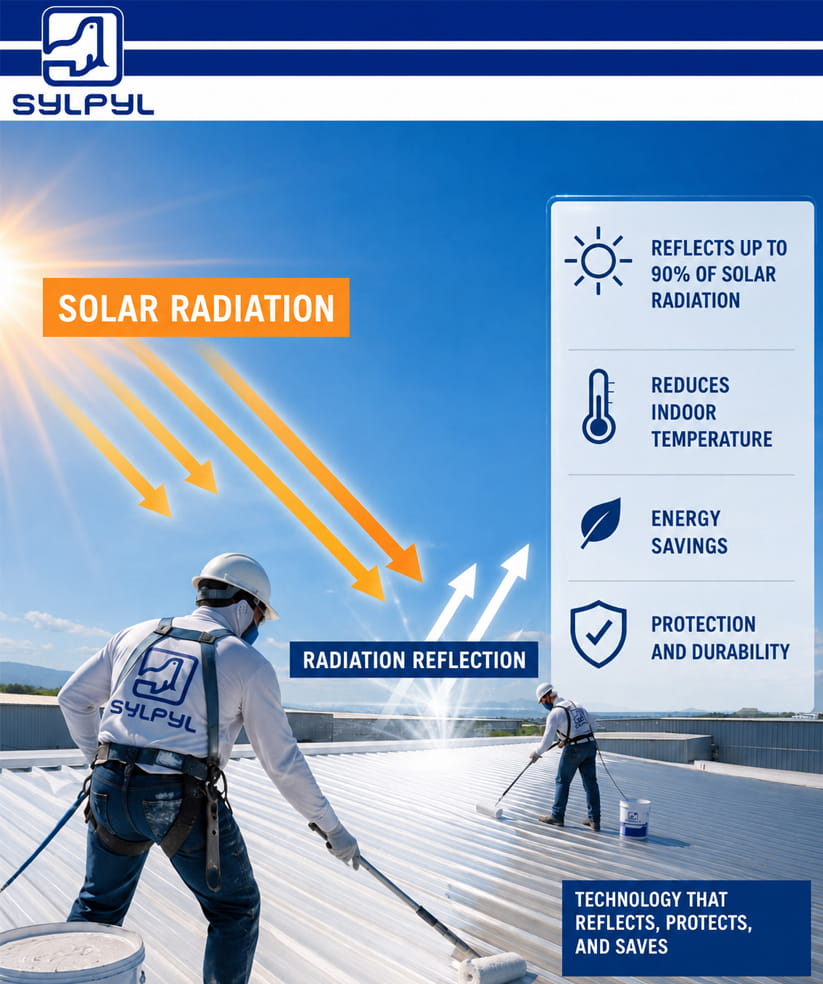
How Do Ceramic Spheres Work in Thermal Paint?
The secret behind many modern thermal paints lies in ceramic microspheres.
These tiny hollow particles create a barrier that reduces heat transfer.
Main Benefits of Ceramic Microspheres:
• ☀️ Reflect solar radiation
• 🔥 Reduce thermal conductivity
• 🌡️ Lower surface temperature
• 🏠 Help maintain cooler indoor environments
• ⚙️ Reduce air conditioning workload
When solar radiation hits an industrial building, much of the heat is normally transferred indoors.
However, with a reflective thermal coating, a significant portion of that energy is rejected before it penetrates the structure.
Temperature Reduction: Up to 10°C Less Indoors
One of the greatest advantages of reflective thermal paints is their ability to reduce indoor temperatures in industrial buildings.
In metal industrial warehouses exposed to sunlight, temperatures can rise dramatically during the day. This excessive heat not only affects employee comfort and productivity, but can also compromise the performance of machinery, stored materials, and sensitive equipment. As indoor temperatures increase, ventilation and cooling systems are forced to operate continuously, leading to higher energy consumption and increased operational costs.
This causes:
• 👷 Uncomfortable environments for personnel
• 🔥 Machinery overheating
• 🌬️ Increased use of ventilation and air conditioning
• ⚡ Higher energy consumption
By applying a thermal coating with ceramic technology, many companies report temperature reductions of up to 10°C in indoor areas, especially on metal roofs and industrial coverings.
This represents a direct impact on energy savings.
Impact on Air Conditioning Electricity Costs
Industrial climate control is one of the highest energy expenses in factories, warehouses, and logistics centers.
When the roof absorbs less heat, the HVAC system needs to work less time to maintain a comfortable temperature.
Most Important Economic Benefits:
• ⚡ Lower electricity consumption
• 💰 Reduced operating costs
• ❄️ Less wear and tear on air conditioning equipment
• 🏭 Extended lifespan of HVAC systems
• 📈 Medium-term return on investment
During extreme heat seasons, the savings can be significant, especially in facilities with large metal surfaces.
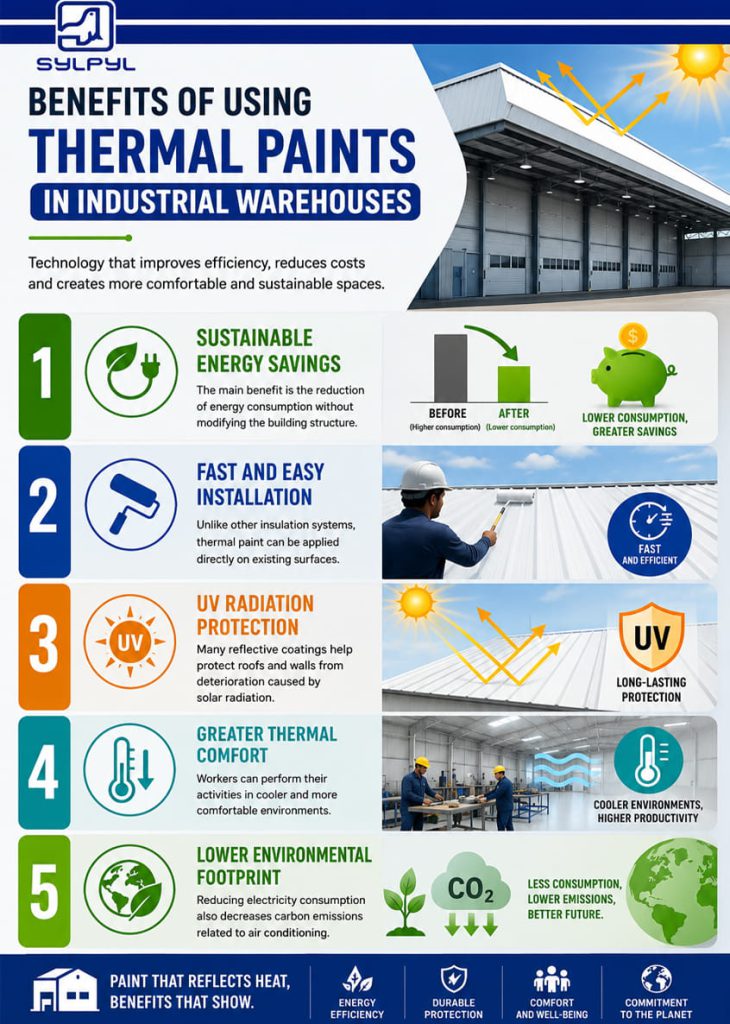
Is Investing in Thermal Paint Worth It?
For many companies, the answer is yes.
Rising electricity costs and high temperatures are making energy-efficiency solutions increasingly necessary.
In addition to improving comfort, these paints help to:
• ♻️ Optimize resources
• 💵 Reduce operating costs
• 🌍 Meet sustainability goals
• 🏢 Improve building energy efficiency
The initial investment is usually recovered through savings in climate control and maintenance.
Trends in Industrial Energy Efficiency
The industry is evolving toward more sustainable solutions.
Today, many companies are looking for technologies that reduce their environmental impact without affecting productivity.
Reflective thermal paints are part of this trend thanks to their ability to combine:
• ⚡ Energy savings
• 🔬 Advanced technology
• 🌱 Sustainability
• 🛡️ Structural protection
• 🌍 Emissions reduction
In regions with hot climates, these coatings are becoming a key solution for modern industrial construction.
Where Can Thermal Coatings Be Applied?
Reflective paints have applications across multiple sectors:
• 🏭 Industrial warehouses
• 📦 Warehouses and storage facilities
• 🚚 Logistics centers
• 🏠 Metal roofs
• 🛳️ Containers
• 🏢 Corporate offices
• 🏡 Residential homes
• ⚙️ Manufacturing plants
• 🚗 Covered parking areas
They can also be applied to concrete surfaces, galvanized metal sheets, and metal structures.
Frequently Asked Questions About Thermal and Reflective Paints
1.- Do thermal paints really reduce temperature?
Yes. Depending on the surface, climate, and coating quality, they can significantly reduce indoor temperatures.
2.- How much can a company save on electricity?
Savings vary depending on the size of the building and air conditioning usage, but many industries experience significant reductions in energy consumption.
3.- Are reflective paints effective for metal roofs?
Yes. They are especially effective on metal roofing sheets, since this material absorbs a large amount of solar heat.
4.- Do thermal paints replace other insulation systems?
Not always. In some cases, they work as a complement to other thermal insulation systems.
5.- How long does thermal paint last?
Depending on the product quality and maintenance, thermal paints can have a long lifespan and maintain their reflective properties for several years.
Conclusion
Thermal and reflective paints represent much more than just a surface finish.
Thanks to technologies such as ceramic microspheres, these coatings function as true thermal insulation capable of reducing the internal temperature of an industrial building by up to 10°C.
The result is clear: less heat, lower air conditioning consumption, and a significant reduction in electricity costs.
In a world where energy efficiency is essential, investing in thermal coatings can make the difference between a costly operation and a more sustainable, efficient, and profitable facility.
 English
 Español